


Enviromedica
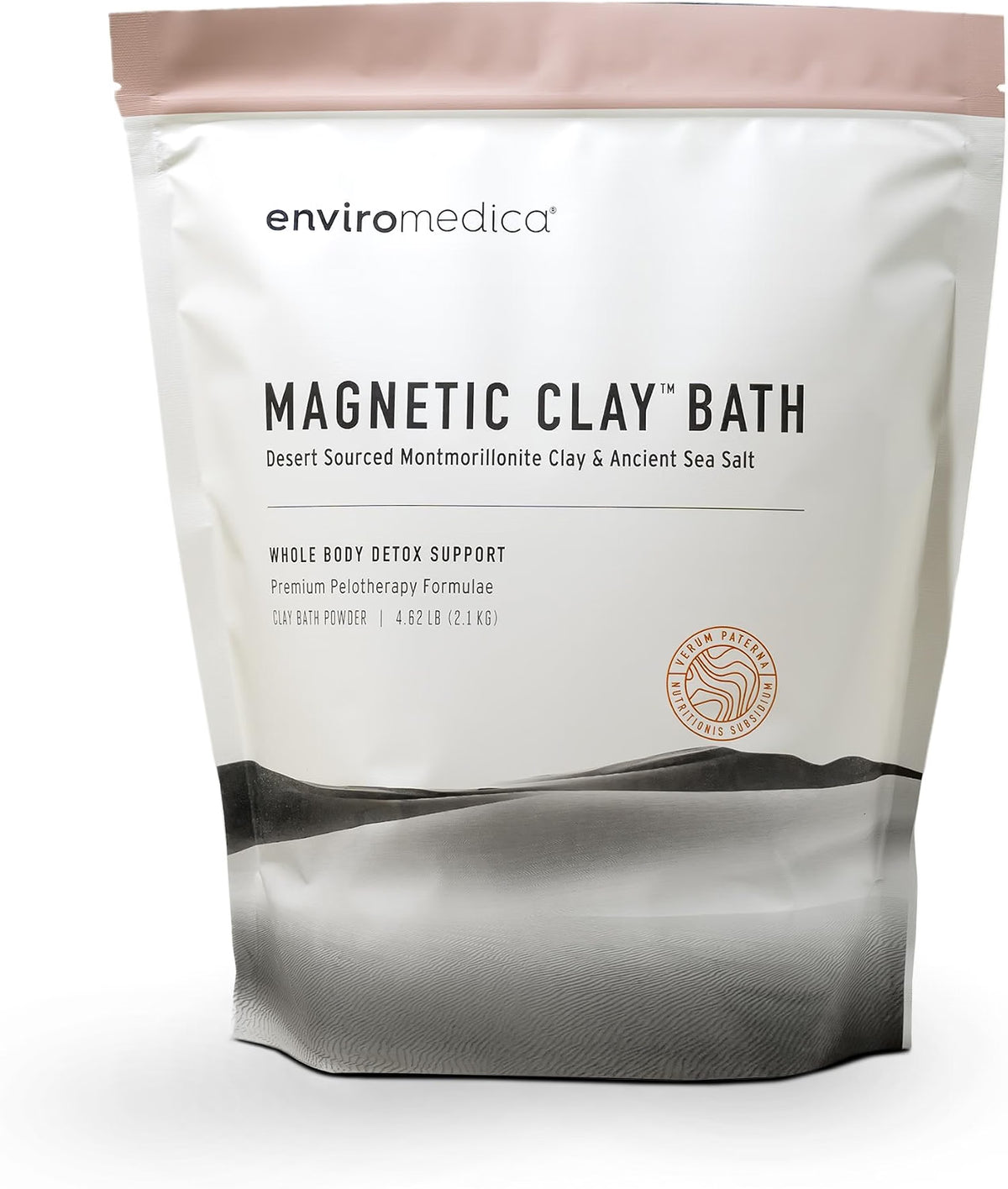
Magnetic Clay™ Bath
Magnetic Clay™ Bath
Couldn't load pickup availability
Clay baths (pelotherapy) have a history going back thousands of years in many parts of the world. A bath or body wrap with bentonite clay deep-cleanses the skin gently and naturally, leaving it soft and fresh. Make Magnetic Clay your new bath ritual!
Benefits
Benefits
- Deep-cleanses the skin.
- Lovely for heavy, tired legs.
- Softens and smooths the skin.
- Cleanses hair and scalp.
- Firms the skin.
How to use
How to use
FAQ
FAQ
Can I eat the clay?
No, it's for external use only.
Will the clay block the drain?
This product won't damage your drains as long as the clay is mixed thoroughly with water first. Rinse any clay residue off the bathtub and tools right after use.
Ingredients
Ingredients
Recycling
Recycling



-
A clay bath for the whole body
Bentonite clay has been used for baths and body wraps for thousands of years. The clay binds dirt, sebum and impurities on the surface of the skin, leaving it feeling clean and soft. Perfect if you want a simple, relaxing ritual that takes care of your skin from head to toe.
-
Clean skin from head to toe
Every day your skin meets dirt, exhaust fumes and residue from skincare products. In a clay bath, the bentonite particles bind what sits on the surface of the skin, and it all rinses away when you shower afterwards.

How does bentonite clay work?
-
What is bentonite?
Bentonite clay, sodium bentonite in this case, comes from volcanic ash that mixed with salt water millions of years ago. It's a non-toxic natural mineral found in, among other places, the Mojave Desert in California, USA. It's also found in the Montmorillon area of France, which is why the word montmorillonite is sometimes used instead of bentonite.
-
Is Magnetic Clay really magnetic?
No, not in that sense. Bentonite clay particles are negatively charged, while many particles on the surface of the skin carry a positive charge. Particles with opposite charges attract each other, so the clay draws in and binds dirt and impurities on the skin, which then rinse away together with the clay.
-
What are the advantages of bentonite clay over other clays?
The crystal structures in sodium bentonite are much thinner, and separate far more easily in water, than those in other clays. When bentonite gets wet and separates, it expands so that its total surface area becomes much larger. That increases its ability to attract other particles.

When do I use bentonite clay?
-
Heavy legs
A clay bath, body mask or body wrap feels wonderful for heavy, tired legs. To make a body wrap, dip strips of cloth in the clay and wrap them around your body, or just your lower legs.
-
Baths & body wraps
Mix the clay into a foot bath or a full bath. You can also make a body wrap: wet the clay into a paste and apply it to your body. It doubles as a firming, exfoliating treatment for the skin.
-
Face mask & hair treatment
You can make your own bentonite clay face mask to deep-cleanse oily skin with impurities. Or make a hair treatment to clear your hair of residue from styling products, hair dye and other chemical treatments.

How to do it:
-
Dissolve the clay thoroughly
Magnetic Clay is a high-quality clay with no emulsifiers, which means it will clump if it isn't mixed properly. For best effect, the clay must be fully dissolved in the water with no lumps. The best way to mix it is with a whisk or a blender.
-
Full bath
Use about 2.5–7.5 dl (1–3 cups) of clay powder for a full bath. Keep the water at about 38–40 °C and bathe for 10–20 minutes. Start with 2.5 dl per bath and increase by 2.5 dl each time. Sensitive people should use less clay powder and bathe for a shorter time.
-
Foot bath
Use about 2.5–5 dl (1–2 cups) for a foot bath. Keep the water at about 38–40 °C and soak your feet for 20–30 minutes. Use a foot bath that isn't made of metal and add enough water to cover your feet well, up to the ankles. Our inflatable footbath is perfect!

-
Preparing a bath
For best results, pour 2 dl of clay powder into an ordinary blender filled three-quarters with warm water. Blend until smooth, then pour the mixture into the bath water. Repeat until the bath has the amount of clay you want. You can also mix by hand, for example with a balloon whisk.
-
Alternative method
Slowly sprinkle the measured clay powder into the warm running bath water and whisk well, for example with a balloon whisk. Small lumps don't matter. Don't fill the bath more than halfway. Let the mixed clay swell for about 15 minutes, then add more water if you like.
-
Bathing & cleaning up
Move the water with your hands so the clay circulates around your body. Bathe for 10–20 minutes. Rinse the bathtub thoroughly with the hand shower and let the water run down the drain for a minute so no clay collects in it. Shower off with lukewarm water and rinse all the clay from your skin.
